5 Nutrient Deficiencies That Impact Mental Health + The Dopamine-Gut Connection
When we think of mental health, we often focus on therapy, lifestyle changes, or even medications. But did you know that nutrition plays a profound role in how your brain functions and how you feel day-to-day? Certain nutrient deficiencies can quietly sabotage your mood, energy, focus, and even resilience to stress. And much of this links back to the gut—the very place where many of our neurotransmitters, including dopamine, are made.
Let’s explore five common nutrient deficiencies that impact mental health and uncover how the dopamine-gut connection ties it all together.
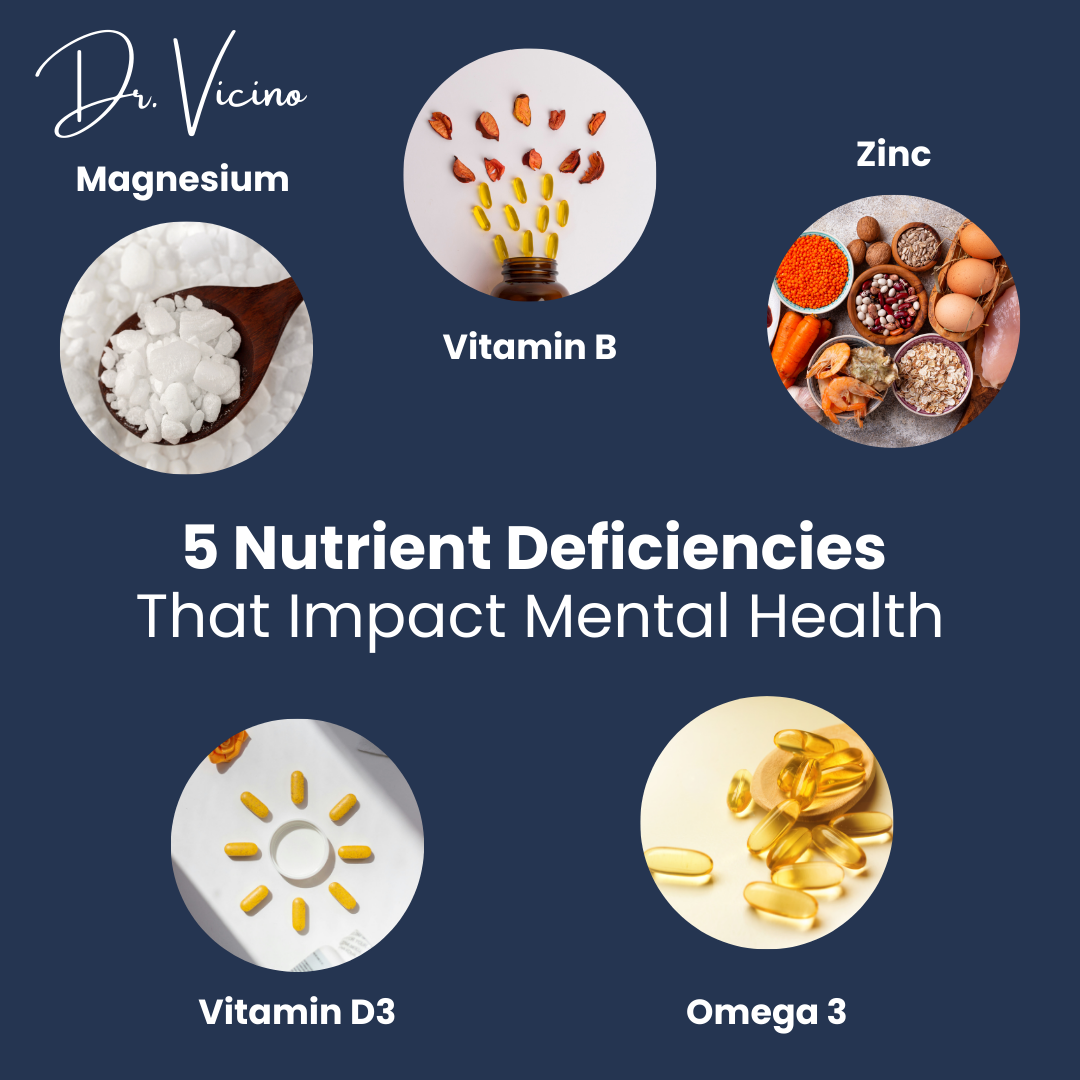
1. Magnesium – The “Relaxation Mineral”
Magnesium is essential for calming the nervous system and regulating the stress response. Deficiency can show up as anxiety, irritability, muscle tension, insomnia, and even panic attacks. Since magnesium also plays a role in serotonin and dopamine signaling, low levels can leave you feeling flat, unmotivated, or on edge.
Gut tie-in: Stress and poor digestion can deplete magnesium, and conversely, magnesium helps relax gut muscles to support regular bowel movements.
2. Vitamin D – The Sunshine Nutrient
Vitamin D acts more like a hormone than a vitamin, influencing mood-regulating neurotransmitters like serotonin and dopamine. Low vitamin D levels have been linked to depression, seasonal affective disorder (SAD), and fatigue.
Gut tie-in: Vitamin D strengthens the gut barrier and supports immune balance, both crucial for lowering inflammation that can trigger mood issues.
3. Zinc – The Neurotransmitter Balancer
Zinc is involved in over 300 enzymatic reactions in the body, many of which affect brain function. Deficiency has been connected with depression, brain fog, and heightened stress sensitivity. Zinc is also essential for metabolizing dopamine, making it critical for focus and motivation.
Gut tie-in: Low zinc often means compromised stomach acid production, which impairs protein digestion—key for making neurotransmitters in the first place.
4. B Vitamins – The Energy & Mood Builders
B vitamins (particularly B6, B12, and folate) are required for methylation—a process the brain uses to produce neurotransmitters and regulate mood. Deficiencies can cause fatigue, poor concentration, depression, and even heightened anxiety.
Gut tie-in: A healthy gut microbiome produces certain B vitamins, but imbalances (like dysbiosis or chronic antibiotic use) can lower this natural supply.
5. Omega-3 Fatty Acids – Brain Fuel
Omega-3s (EPA and DHA) are structural building blocks for the brain. Deficiency is strongly linked to depression, ADHD, and cognitive decline. Omega-3s help regulate inflammation in the brain and improve neurotransmitter communication.
Gut tie-in: A balanced gut microbiome supports absorption of fats, while chronic gut inflammation interferes with omega-3 utilization.
The Dopamine-Gut Connection
Dopamine is often called the “motivation molecule.” It fuels our drive, focus, and reward system—helping us feel satisfaction from achieving goals. But here’s something many don’t realize:
Up to 50% of the body’s dopamine is produced in the gut by specialized bacteria and cells.
Healthy gut bacteria also produce metabolites that signal the brain to regulate dopamine function.
A disrupted gut (from antibiotics, processed foods, or stress) can throw dopamine levels out of balance, leading to low motivation, fatigue, or even addictive tendencies as the brain seeks stimulation.
Think of the gut as the “control center” for dopamine. Without the right nutrients and microbial support, your brain may struggle to sustain focus, joy, and resilience.
Bringing It All Together
Nourish your body with magnesium-rich leafy greens, zinc-rich seeds and seafood, and omega-3-packed fish.
Support gut health with fiber, probiotics, and fermented foods.
Spend time outdoors for vitamin D and ensure adequate B vitamins through whole foods or high-quality supplementation when needed.
When nutrition and gut health align, your mental health can flourish. By addressing deficiencies and strengthening the dopamine-gut connection, you’re building a foundation not just for a healthier body—but for a more vibrant, motivated, and emotionally balanced life.