Natural Alternatives to ADHD Medications
Attention-Deficit/Hyperactivity Disorder (ADHD) is often managed with stimulant medications like Adderall, Ritalin, or Vyvanse. While these can be effective, not everyone tolerates them well, and some families seek more natural or integrative approaches to improve focus, reduce impulsivity, and support emotional regulation.
The good news? There are evidence-based lifestyle, nutritional, and herbal strategies that may help manage ADHD symptoms—either alongside medication or as alternatives when appropriate.
1. Nutrition for Focus & Calm
The brain is fueled by what we eat. Certain dietary changes can make a big difference in attention and mood stability.
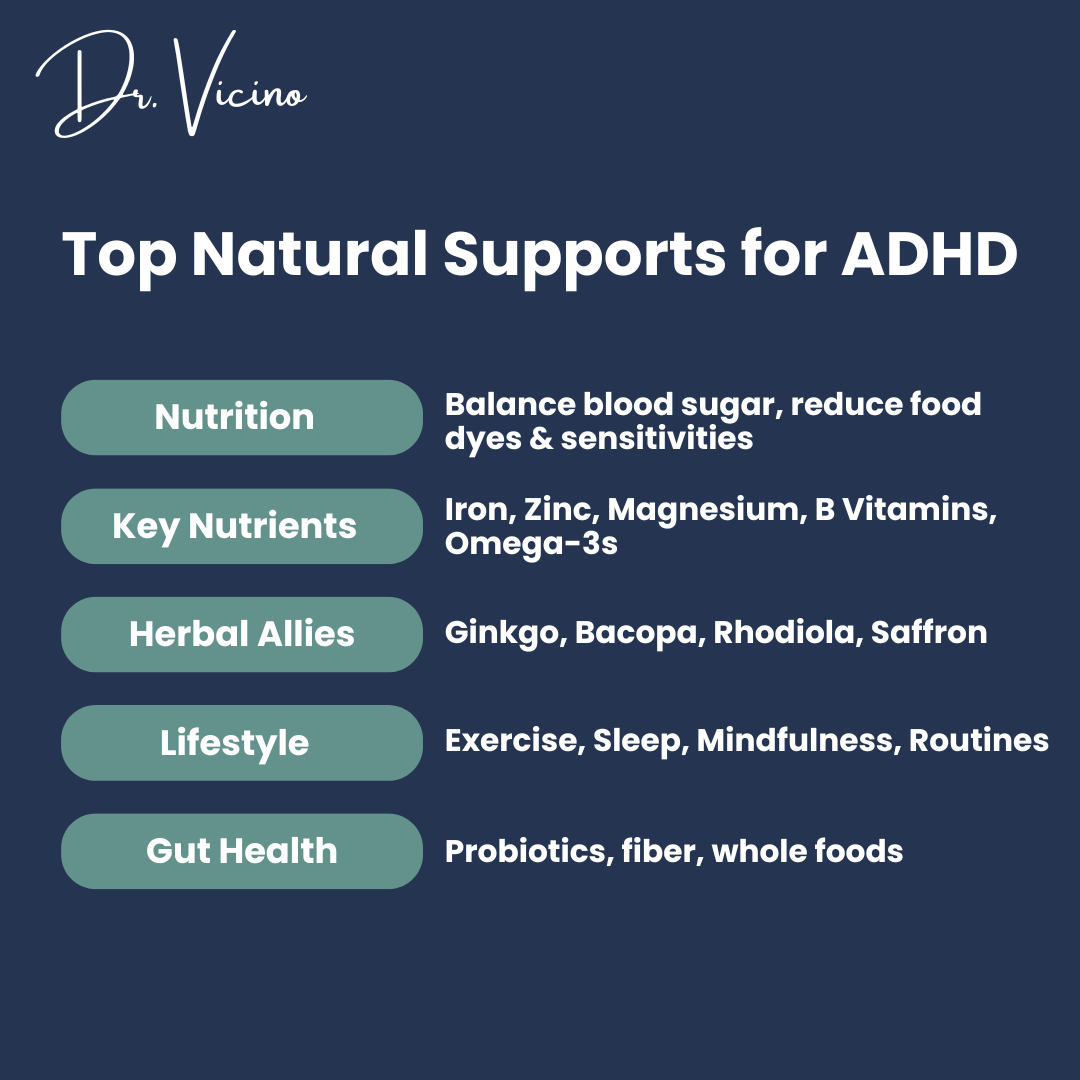
Balance Blood Sugar: Fluctuations in glucose can worsen hyperactivity, irritability, and poor focus. Meals with protein, fiber, and healthy fats help maintain steady energy.
Reduce Food Sensitivities: Gluten, dairy, artificial dyes, and preservatives can trigger behavioral symptoms in some children and adults. An elimination diet may provide insight.
Boost Omega-3s: Studies show omega-3 fatty acids (EPA and DHA) support brain health, attention, and mood. Fatty fish, flax, chia seeds, or supplements can help.
2. Key Nutrients for Brain Function
Certain nutrient deficiencies are common in people with ADHD and may worsen symptoms:
Iron: Low ferritin is linked to poor dopamine function and attention difficulties.
Zinc: Important for regulating dopamine, which influences motivation and focus.
Magnesium: Known as the “relaxation mineral,” it helps calm the nervous system.
B Vitamins: Especially B6 and B12, which play roles in neurotransmitter production.
3. Herbal & Natural Supports
Several herbs and natural compounds show promise in supporting attention and reducing hyperactivity:
Ginkgo biloba: Improves blood flow to the brain and may support memory and focus.
Bacopa monnieri: An Ayurvedic herb that enhances learning and reduces anxiety.
Rhodiola rosea: An adaptogen that helps balance energy, stress response, and mental clarity.
Saffron: Emerging research suggests saffron may improve attention and mood, with effects comparable to some stimulant medications in children.
4. Lifestyle Strategies That Make a Difference
Exercise: Regular physical activity boosts dopamine and norepinephrine—neurotransmitters that improve focus and motivation.
Sleep: Poor sleep worsens hyperactivity and impulsivity. Establishing consistent bedtime routines is essential.
Mindfulness & Meditation: Practices like yoga and deep breathing improve self-regulation and calm the nervous system.
Structured Routines: Predictability helps reduce overwhelm and supports executive function.
5. Gut Health & the Brain
There’s growing evidence of a gut-brain connection in ADHD. Supporting gut health with probiotics, fiber, and whole foods may improve mood, reduce inflammation, and optimize nutrient absorption.
Bringing It All Together
ADHD is complex, and treatment should always be personalized. While medications can be effective, natural approaches offer powerful tools to support focus, calm, and emotional balance.
By combining nutrition, targeted supplements, herbal medicine, and lifestyle strategies, individuals with ADHD can build a holistic foundation for thriving—whether or not medication is part of the plan.